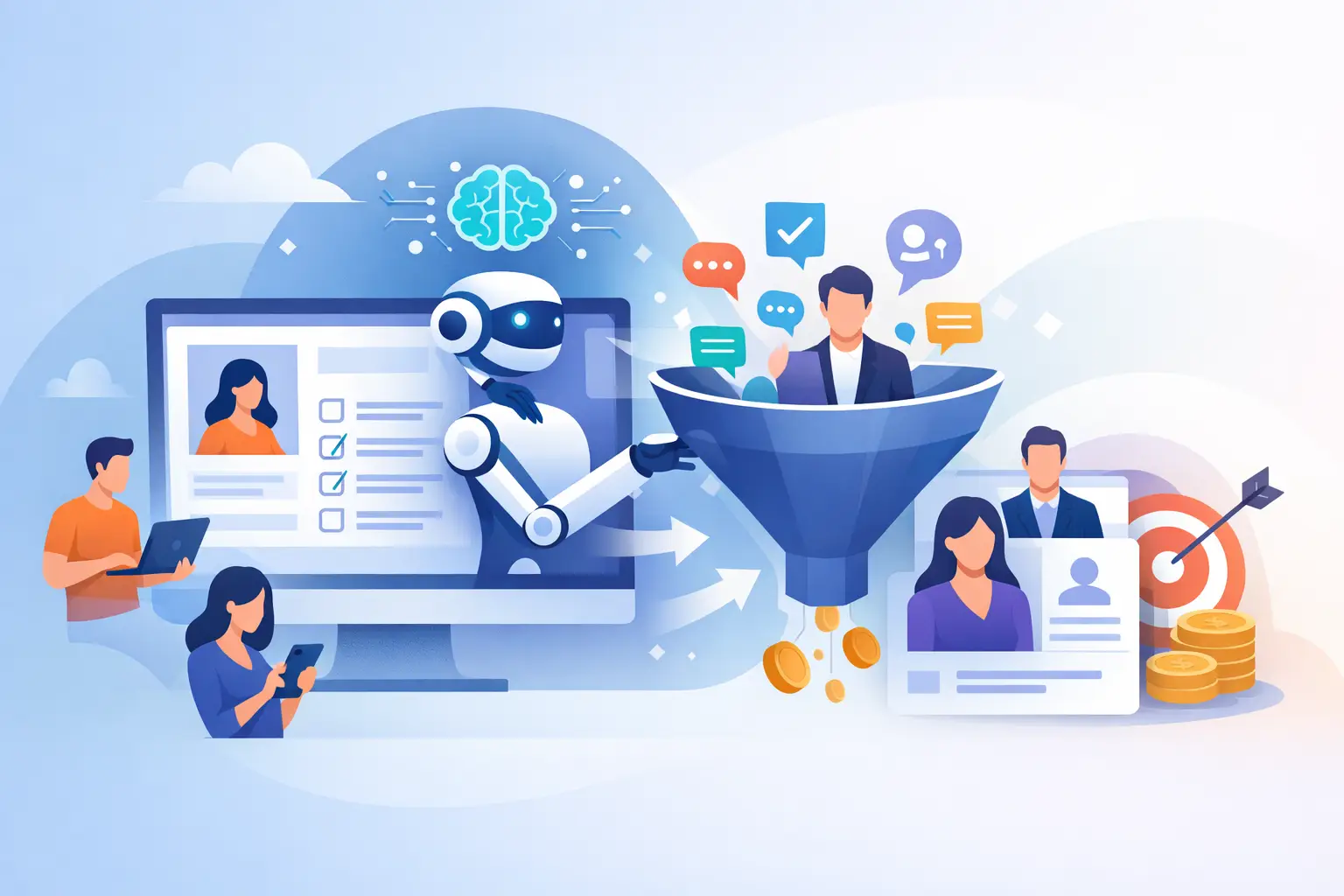
A quiz can take weeks to plan when every question, result, and follow-up email starts from a blank document. AI quizzes cut that production time sharply, but speed is only valuable when it produces a better conversion path. For marketers, the real opportunity is not generating ten generic personality questions. It is using AI to get a targeted, lead-generating quiz live faster, then improving it with actual audience data.
The best AI-assisted quiz builders help you move from a rough idea to a structured funnel: questions that reveal intent, results that feel personal, and lead capture that supports the next marketing step. Used well, they can give a small team the output of a much larger content operation. Used carelessly, they can create a polished-looking quiz that attracts clicks but tells you nothing useful about potential customers.
Where AI Quizzes Earn Their Keep
AI is especially effective at the early, labor-intensive parts of quiz creation. Give it a clear audience, offer, and goal, and it can suggest quiz angles, draft questions, generate answer options, and map those answers to result profiles. That means a fitness coach can start with “What is your best workout style?” while a B2B agency can build “What is slowing down your lead pipeline?” without staring at an empty screen.
This matters because quizzes work best when they are specific. Broad topics generate curiosity, but specific topics generate qualified leads. A quiz called “Which marketing strategy fits your business?” may earn clicks. A quiz called “What is costing your ecommerce store the most revenue?” creates a much stronger connection to a paid audit, product recommendation, or email sequence.
AI can also help marketers create variations quickly. You might develop one quiz for first-time visitors, another for newsletter subscribers, and a third for paid social traffic. The core logic can stay consistent while the language, examples, and calls to action match each visitor’s awareness level. That is a practical way to personalize without building separate campaigns from scratch.
Still, AI cannot decide what your business needs to learn from a prospect. It can suggest questions, but it does not know whether job title, budget range, skin concern, website platform, or timeline to purchase is the field that changes your sales process. That choice belongs to the marketer.
The Difference Between a Fun Quiz and a Funnel
A high-performing quiz does two jobs at once. It gives the participant an enjoyable, useful result, and it collects information your business can act on. If either side is weak, conversion performance suffers.
Start with the conversion event. Do you want email subscribers, booked consultations, product recommendations, course enrollments, or better audience segmentation? A quiz built to capture leads needs a different structure than a quiz designed purely for social engagement. For lead generation, the result should naturally create a reason to continue the relationship.
For example, a skincare brand might identify participants as “Barrier Repair Focused,” “Acne Control Focused,” or “Brightening Focused.” The immediate result provides a useful recommendation. The email follow-up can then deliver a tailored routine, relevant product education, and an offer that matches that concern. The quiz does not just collect an email address. It gives the brand context for what to send next.
This is where many AI-generated quizzes miss the mark. They produce clever categories but no meaningful segmentation. If every result leads to the same newsletter and the same product page, the quiz may entertain visitors, but it is not doing much conversion work.
Ask questions that create decisions
Every question should earn its place. A question can make the experience more engaging, identify a segment, qualify a lead, or guide the final recommendation. Ideally, it does more than one of those things.
Before accepting AI-generated questions, ask: What will we do differently based on this answer? If the answer is “nothing,” remove it or replace it. A five-to-seven-question quiz with clear intent will often outperform a long quiz full of trivia-like prompts.
Keep the questions easy to answer. Visitors should not need to research, calculate, or disclose highly sensitive details to get a useful result. In B2B, ask about goals, current processes, team size, or priority challenges before asking for a budget. In consumer marketing, use everyday language and visual choices when they genuinely improve clarity.
Make result pages worth the exchange
The result page is the moment of truth. It should explain what the participant got, why they got it, and what they should do next. AI can draft this copy, but generic results are a conversion leak. “You are a creative leader who values growth” feels flattering, not useful.
A stronger result connects directly to a problem and a next step. Tell visitors what their result means, name one or two common obstacles, and offer a relevant resource, product collection, or consultation. The call to action should feel like a logical continuation of the quiz, not an abrupt sales pitch.
How to Build AI Quizzes That Convert
The fastest path is not asking a tool to “make a quiz about marketing.” Give it a compact brief with the inputs that shape the funnel. Include your audience, the quiz promise, the offer, the result categories, and the action you want people to take after seeing their result.
For instance: “Create a six-question quiz for service business owners who want more qualified website leads. Segment them into low traffic, weak conversion, unclear offer, and poor follow-up. Each result should recommend one practical next step and invite the participant to receive a tailored checklist by email.” That prompt gives AI a job it can handle well.
Then edit aggressively. Check that answer options are mutually clear, the scoring logic is believable, and each result has a distinct path. Remove jargon that your customers do not use. Add examples from your actual industry. If you have sales-call notes, customer reviews, or support questions, those are far more valuable inputs than broad internet-style language.
Your quiz builder matters here. Look for tools that let you adjust scoring, create outcome-based logic, capture leads before or after results, connect data to your email platform, and customize the result page. AI generation is a useful feature, but it should not be the only reason you choose a platform. A fast draft is wasted if the builder cannot support the segmentation and follow-up your campaign requires.
Watch for These AI Quiz Mistakes
AI speeds up production, which can make weak assumptions harder to notice. The most common issue is surface-level personalization. Changing a participant’s name in a result is not the same as tailoring the recommendation based on their answers.
Another problem is overconfident copy. AI may state that a result is definitive even when the quiz only offers a light directional assessment. Use language that matches the stakes. A style quiz can be playful. A quiz related to health, finance, legal decisions, or hiring needs stronger review, careful claims, and appropriate boundaries.
Finally, do not publish without testing the full journey. Take every answer path yourself. Check mobile formatting, form behavior, result accuracy, confirmation emails, tags, and destination pages. A broken tag or generic email sequence can erase the segmentation value you worked to create.
Measure the Funnel, Not Just Quiz Starts
A high quiz-start count can look exciting while delivering little business value. Track the full path: landing page visits, quiz starts, completion rate, lead capture rate, result-page clicks, email engagement, and the conversion event that matters to your business.
Completion rate tells you whether the quiz is easy and compelling enough to finish. Lead capture rate shows whether the value exchange is persuasive. Downstream clicks and purchases reveal whether your results and follow-up actually match participant intent. Review these numbers by result type as well. One segment may produce fewer leads but much higher-value customers.
Use AI to generate fresh question angles or result copy for testing, but change one meaningful variable at a time. If you rewrite the title, questions, results, opt-in offer, and call to action all at once, you will not know what improved performance. Better quizzes come from disciplined iteration, not endless rewrites.
The winning move is simple: let AI handle the blank-page work, then apply the judgment only your business has. Build around a real customer decision, deliver a result people can use, and connect every segment to a relevant next step. That is how a quick AI-generated draft becomes a growth asset that keeps earning leads long after launch.