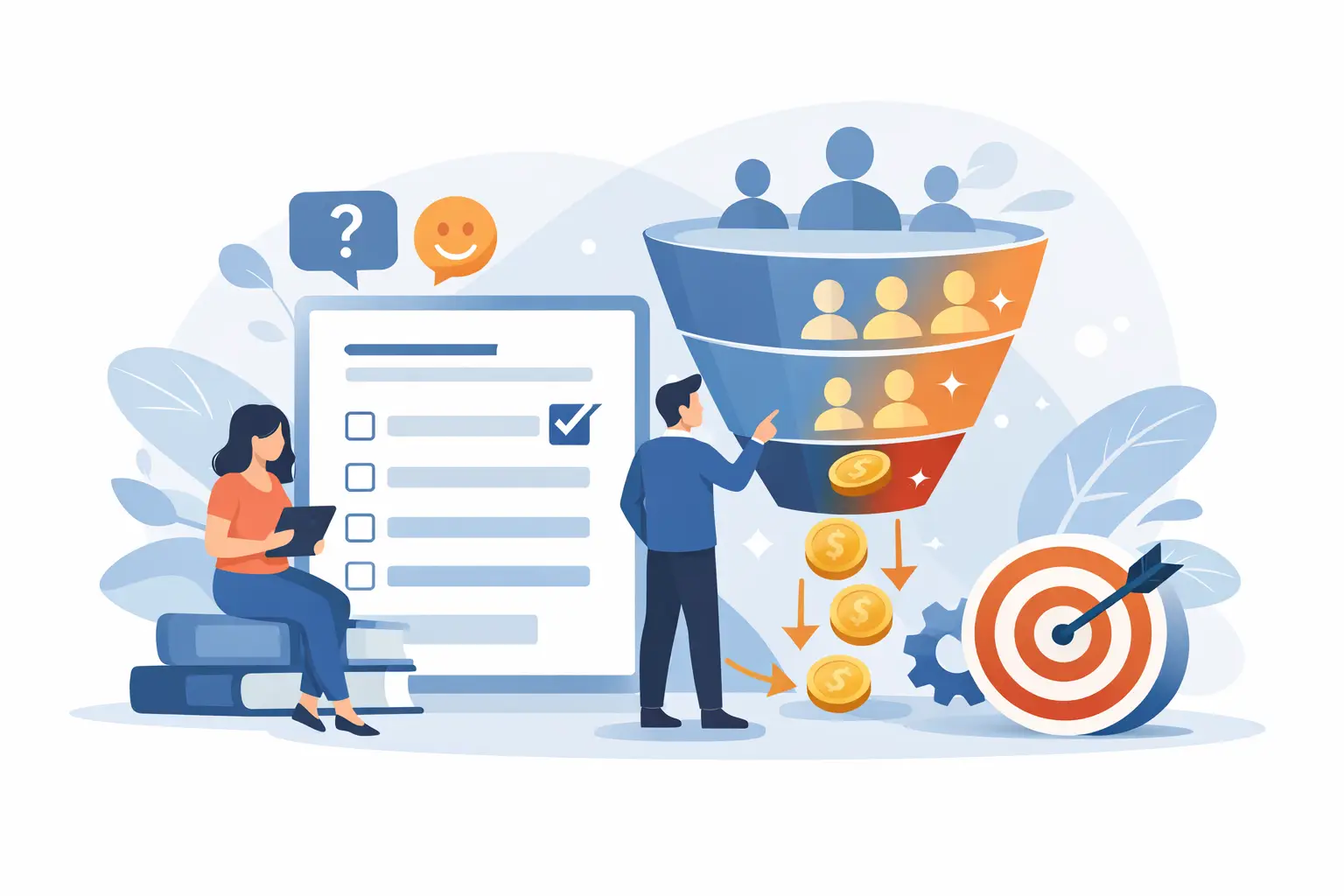
A visitor lands on your site, skims a few lines, and leaves. That is the default outcome for most marketing pages. A well-built quiz changes the exchange: instead of asking for an email before delivering value, you offer a useful result first. Learning how to use quizzes for leads means turning passive traffic into a conversation, then using the answers to make every follow-up more relevant.
Quizzes work because they give people something they already want: clarity, a recommendation, a score, or a better understanding of their situation. For marketers, every answer creates first-party data. The result is a lead magnet that can capture contacts, segment audiences, and point prospects toward the next best offer at the same time.
How to Use Quizzes for Leads Without Killing Completion Rates
The strongest lead-generation quizzes are built around one clear conversion goal. That could be growing an email list, qualifying demo requests, identifying product fit, or sending visitors to the right service page. Trying to do all four in one quiz usually creates too many questions and a vague result.
Start with the business decision your visitor is trying to make. A skincare brand might create a “Find Your Ideal Routine” quiz. A marketing agency could offer a “What Is Holding Back Your Lead Generation?” assessment. A course creator may use a “Which Learning Path Fits Your Goals?” quiz. The topic should connect directly to a problem your product, service, or content can solve.
The promise matters more than clever question writing. “Take our quiz” gives visitors no reason to start. “Find the email strategy that fits your list size and goals” tells them exactly what they will get. Put that promise in the headline, ad copy, social post, or callout box that drives traffic to the quiz.
Keep the quiz focused enough to finish in two to four minutes. For most lead-generation campaigns, six to 10 questions is the sweet spot. Shorter quizzes can work well for a simple product recommendation. More detailed assessments can justify 12 to 15 questions when the result has high perceived value, such as a personalized business scorecard or a consultation recommendation.
Build Questions That Create Better Segments
Every question should earn its place. It must either improve the result, identify buying intent, or help you personalize follow-up. If it does none of those things, remove it.
Start with easy, low-pressure questions that make the quiz feel approachable. Then move into questions that reveal goals, challenges, preferences, budget range, experience level, or timeline. For example, a quiz for an email marketing service might ask about list size, current sending frequency, top campaign goal, and the biggest obstacle to growth.
Avoid questions that feel like a form disguised as a quiz. Asking for company revenue, phone number, or a full marketing budget too early will reduce completion rates. You can collect more sensitive information later, especially when the visitor has already received a useful result and understands why the next step benefits them.
Multiple-choice answers usually outperform open-text fields because they are faster to complete and easier to score. They also make segmentation cleaner. Instead of asking, “Tell us about your marketing challenges,” offer options such as “not enough traffic,” “low landing page conversions,” “weak follow-up,” or “unclear audience targeting.” Those answers can trigger precise email sequences and result-page recommendations.
Use answer logic when the outcome depends on fit
Not every quiz needs complicated branching. A basic scored personality quiz can be enough for top-of-funnel list growth. But if you sell multiple offers, serve distinct industries, or want to qualify leads, answer logic is worth the effort.
Conditional questions prevent visitors from seeing irrelevant prompts. A consultant who selects “I am just starting” should not be asked about optimizing a mature team’s reporting process. Likewise, someone who signals a high budget and urgent timeline can be routed toward a strategy call, while early-stage visitors receive educational resources.
This is where a capable quiz builder earns its place. Look for tools that support scoring, branching, customizable result pages, email integrations, and audience tags. A beautiful quiz that cannot pass useful data to your marketing stack is an engagement asset, not a lead system.
Put the Opt-In at the Moment of Highest Intent
The email gate is one of the biggest decisions in any quiz funnel. Ask too early, and visitors may abandon before they see the value. Ask too late, and they can consume the result and disappear.
For most businesses, the best approach is a soft gate immediately before the full result. Show a preview such as “Your top growth opportunity is ready,” then ask for an email to reveal the detailed recommendation, action plan, or product match. This keeps the exchange fair: the visitor knows what they are receiving, and you receive permission to continue the conversation.
Make the opt-in copy specific. “Enter your email to get results” is functional but weak. “Send my personalized 30-day conversion plan” makes the value tangible. If your quiz has multiple result types, reflect the outcome dynamically. Someone who receives a beginner result should be offered a beginner-focused guide, not a generic newsletter subscription.
You can also test an optional opt-in after the result page. This may generate fewer raw leads but can improve lead quality because the visitor has already engaged with the recommendation. The right choice depends on traffic temperature and offer value. Cold paid traffic often needs a clearer value exchange before results. Existing blog readers may be more willing to opt in after seeing a helpful answer.
Make Result Pages Do More Than Reveal an Answer
A generic result such as “You are a Visionary!” may be fun, but it will not reliably create revenue. Your result page should connect the quiz outcome to a practical next step.
Each result needs three elements: a concise explanation of what the result means, advice that proves you understand the visitor’s situation, and one focused call to action. That CTA could be a recommended product, a relevant resource, a free trial, a consultation, or a tailored case study.
For example, a quiz result for a business with low conversion readiness could explain that the visitor has a clear offer but lacks audience insight. It could then recommend a customer research template and invite them to explore a quiz tool with segmentation features. A high-readiness result might encourage a demo or a strategy call instead.
Do not overload the page with five competing buttons. One primary action is usually enough, supported by a secondary, lower-commitment option when needed. The quiz already did the work of narrowing the path. Keep the momentum.
Turn Quiz Answers Into Personalized Follow-Up
Capturing the email is not the finish line. It is the start of the part that makes quizzes outperform static lead magnets.
Send the promised result immediately, ideally with a short recap of the visitor’s key answers. Then build email sequences around the segments you created. Someone who identified low traffic needs different help than someone with strong traffic but poor conversion rates. Someone comparing software options needs different content than someone who needs a basic implementation plan.
A simple follow-up sequence can include a useful tip on day one, a relevant example or case study on day three, and a targeted offer on day five or seven. The messages should feel like a continuation of the quiz, not a sudden shift into generic promotion.
Use quiz tags in your email platform and CRM to track behavior over time. If a lead clicks product recommendations but does not buy, send comparison content. If they repeatedly engage with advanced resources, raise their lead score or invite them to a higher-intent offer. Quiz data is most valuable when it shapes what happens next.
Measure the Funnel, Not Just the Number of Leads
A quiz with a high completion rate can still underperform if few visitors opt in or take action after seeing their result. Track the full path: quiz starts, completion rate, opt-in rate, result-page clicks, email engagement, and eventual sales or booked calls.
If starts are low, improve the promotion and opening promise. If people begin but do not finish, reduce friction, shorten the quiz, or make questions more engaging. If completion is strong but opt-ins lag, strengthen the value of the result and test the timing of the gate. If leads do not convert later, revisit your segmentation and follow-up message match.
Paid traffic, organic blog traffic, and social visitors may perform very differently. Analyze results by source before making major changes. A quiz that works brilliantly as an embedded blog conversion tool may need a different landing page and stronger introduction when used in paid ads.
Launch a Quiz With a Clear Test Plan
Start with one audience, one conversion goal, and a small number of meaningful result types. Build the first version quickly, then let real visitor behavior tell you what needs work. The highest-performing quiz funnels are rarely perfect on launch day. They improve through sharper promises, better questions, more useful results, and follow-up that respects what each lead actually told you.
When your quiz delivers a genuinely useful answer, asking for contact details stops feeling like an interruption. It becomes the natural next step in a conversation your audience was already motivated to start.