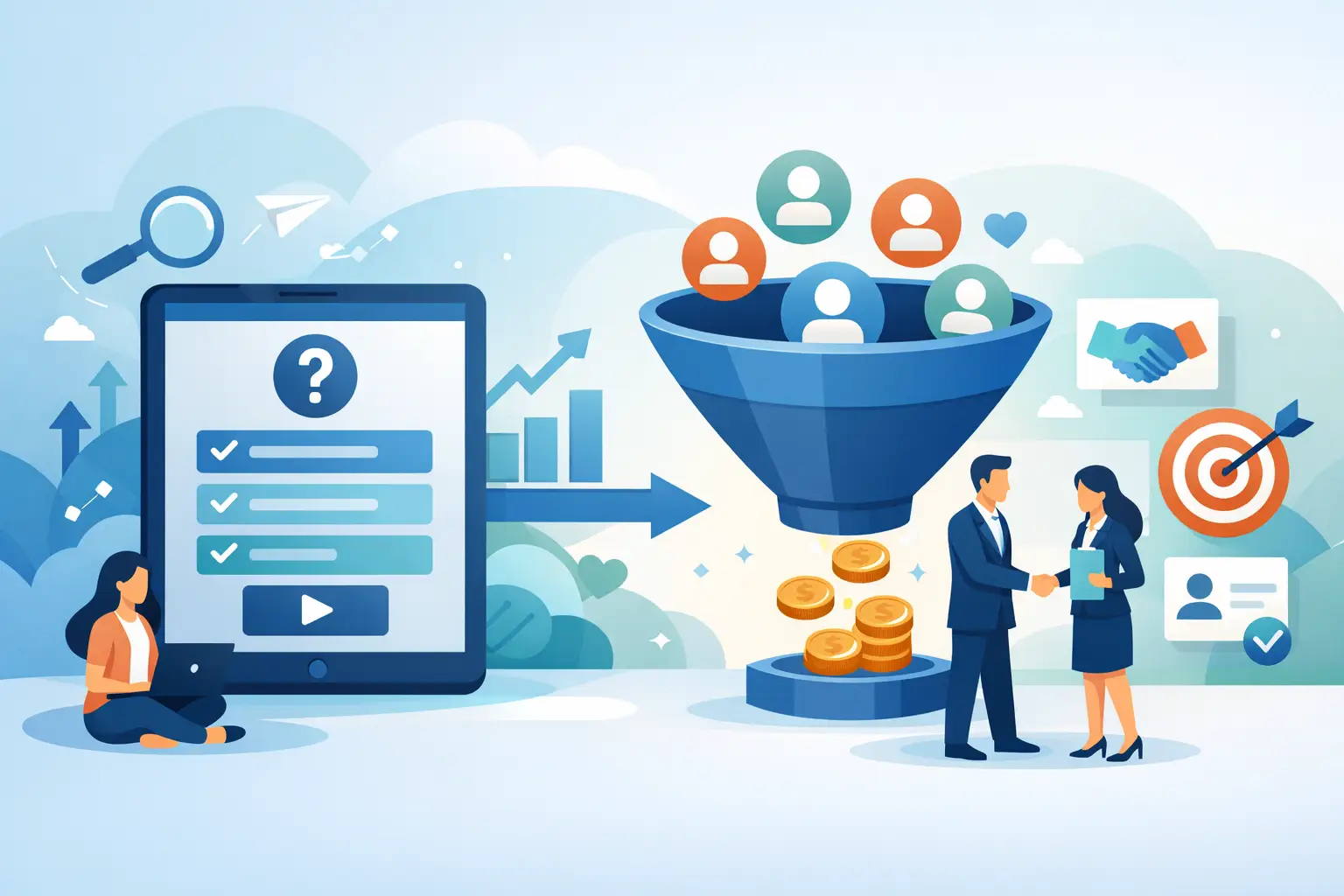
A visitor lands on your site, scans a few lines, and leaves. That pattern is expensive. Quiz marketing gives that same visitor a reason to participate, share useful information, and stay long enough for your brand to earn the next step.
The right quiz is not a fluffy engagement tactic. It is a conversion asset that collects zero-party data, segments your audience, and routes people toward recommendations that actually match their needs. For businesses fighting low opt-in rates, generic email campaigns, or unclear customer intent, that is a serious advantage.
What Quiz Marketing Actually Does
Quiz marketing uses interactive quizzes to attract attention and turn answers into actionable customer data. A visitor answers a short series of questions, receives a personalized result, and is invited to take a relevant next action, such as joining an email list, viewing a product collection, booking a consultation, or downloading a resource.
The strongest quizzes sit between content and conversion. They feel useful enough that people want their result, but they are structured carefully enough that every answer helps you understand what that person is likely to need next.
A skincare brand might build a product finder. A marketing agency could offer a “What Is Your Lead Generation Gap?” assessment. A fitness creator may create a workout-style quiz. Different offers, same principle: replace a generic message with a personalized path.
That matters because people rarely wake up wanting to join another email list. They do want clarity, recommendations, and a quick answer to a question they already have. A quiz creates that value exchange before the email field appears.
The Quiz Funnel: From Click to Conversion
High-performing quiz funnels are built around one business goal. Trying to collect leads, sell products, educate prospects, and conduct market research in one quiz usually produces a confusing experience. Start by deciding what success looks like.
For most businesses, the funnel has five connected parts:
- A specific promise. The quiz title should describe an outcome people care about. “Find Your Ideal Project Management System” is stronger than “Take Our Software Quiz.”
- Questions that create meaningful segments. Ask questions that change the recommendation, offer, or follow-up message. If an answer will not affect the result, consider removing it.
- A lead capture moment with a clear benefit. Ask for an email when the value is obvious, often just before revealing detailed results. Explain what they will receive, not just what you want from them.
- A result page with a next step. Give a useful result, explain why it fits, and direct the visitor to one relevant action.
- Follow-up that reflects the result. Send different email sequences to different segments. This is where the real conversion lift often happens.
The trade-off is simple: more questions can produce richer data, but every unnecessary question increases abandonment. For many lead-generation quizzes, five to eight questions is enough. Product match quizzes can justify more questions when users understand that better answers create a better recommendation.
Start With the Outcome, Not the Questions
A common mistake is opening a quiz builder and brainstorming fun questions. Start at the other end. What decision should the quiz help the visitor make? What action should they take after seeing their result?
If you sell services, your result types may reflect readiness or need. For example, a business owner could be categorized as “Foundation Builder,” “Pipeline Optimizer,” or “Scale-Ready.” Each outcome should lead to a different service page, consultation angle, or email nurture sequence.
If you sell products, the result types should map to real buying paths. Do not create personality-style outcomes if they cannot guide a product recommendation. The best result pages reduce decision fatigue and make the next click feel obvious.
How to Create a Quiz That Captures Better Leads
Strong quiz marketing depends less on clever wording than on strategic alignment. Your quiz must connect audience pain points, segmentation data, and a next step your business can deliver.
Choose a Topic With Built-In Curiosity
People click when the quiz promises self-discovery, a recommendation, a diagnosis, or a benchmark. The topic should be narrow enough to feel relevant and broad enough to attract a meaningful share of your audience.
Good quiz angles often include:
- “Which [product or service] is right for you?”
- “What is holding back your [desired outcome]?”
- “What type of [identity or approach] are you?”
- “How ready are you for [goal or milestone]?”
- “What should you focus on first?”
The best option depends on your offer. An ecommerce store will usually benefit from a product finder. A consultant may generate stronger leads with an assessment that identifies a costly problem. A publisher or creator may use a personality quiz to grow the list first, then monetize attention over time.
Write Questions That Improve the Recommendation
Every question should either help qualify the lead or improve the result. Ask about goals, challenges, preferences, budget range, experience level, timeline, and current tools when those factors genuinely shape the recommendation.
Avoid asking for sensitive details too early. A first-time visitor may tell you their biggest marketing challenge but hesitate to disclose revenue or phone number before they trust the value of the quiz. Progressively collect more data after the initial conversion if your sales process requires it.
Use plain language. “What best describes your current lead-capture infrastructure?” may be technically accurate, but “How are you currently collecting leads?” will perform better for most audiences.
Make the Opt-In Feel Worth It
The lead form should not feel like a toll booth. Tell users what comes next: their detailed result, a personalized action plan, tailored product picks, or a useful resource based on their answers.
There is no universal rule for whether the email gate belongs before or after the result. Gating before the result usually grows the list faster, especially when the promise is strong. Showing a basic result first and offering a detailed report by email can reduce friction and build trust. Test both approaches if quiz traffic is substantial.
Keep the form short. Email address is often enough. Add first name only if you will use it. Collecting company size, budget, and phone number can make sense for high-ticket B2B qualification, but it will lower completion rates. That may be an acceptable trade-off when sales quality matters more than list volume.
Personalization Is the Revenue Driver
The quiz itself earns attention. Personalized follow-up turns that attention into revenue.
At minimum, connect each outcome to a dedicated email segment. Someone who gets a “beginner” result should not receive the same campaign as a buyer who is ready to compare advanced solutions. Use the result to tailor the subject line, advice, proof points, and call to action.
Your result page should do the same job. Lead with the outcome in clear, positive language. Explain the two or three answers that influenced it. Then recommend a focused action. A vague button like “Learn More” wastes the momentum you just created. “See Your Recommended Quiz Builder Features” or “Get Your Custom 7-Day Plan” gives the visitor a reason to continue.
This is also where a capable quiz platform matters. Look for branching logic, customizable outcomes, email and CRM integrations, tracking support, mobile-friendly templates, and analytics that show where people abandon the quiz. AI quiz creation features can speed up first drafts, but they are not a substitute for a smart funnel. You still need to check the logic, refine the voice, and make sure each result leads somewhere commercially useful.
Measure the Numbers That Tell the Truth
A quiz with thousands of starts can still be underperforming. Track the full path: quiz views, start rate, completion rate, opt-in rate, result-page click-through rate, email engagement, and downstream conversion or revenue.
Completion rate shows whether the quiz experience is too long or confusing. Opt-in rate reveals whether the perceived value of the result is strong enough. Result-page clicks and email conversions tell you whether your personalization is doing its job.
Do not judge every quiz by the same benchmark. A lightweight entertainment quiz may generate a high completion rate but weaker purchase intent. A detailed B2B assessment may attract fewer completions while producing more qualified sales conversations. The right metric depends on the economics of your offer.
Run focused tests instead of redesigning everything at once. Test the title, quiz cover image, number of questions, email-gate language, and result-page call to action. Small improvements compound quickly when a quiz is receiving steady traffic.
Put Your Quiz Where Intent Already Exists
A quiz cannot generate results if nobody sees it. Feature it in high-intent blog posts, relevant landing pages, email campaigns, paid social ads, and website pop-ups with a clear trigger. A blog article about choosing software is a natural place to offer a recommendation quiz. A generic homepage banner may work, but it usually needs a broader promise.
Match promotion to context. Send cold social traffic to a short, curiosity-driven quiz. Offer deeper diagnostic quizzes to readers who have already consumed expert content. If your audience is primarily mobile, test the full experience on a phone before spending on distribution. Tiny buttons, slow load times, and awkward answer formats can quietly damage conversion rates.
The best quiz is not the one with the most playful questions. It is the one that gives your visitor a useful answer and gives your business a smarter conversation to continue. Build for that exchange, measure what happens after the result, and your quiz can become one of the hardest-working pages on your site.